


The collaboration between TÜV AUSTRIA in Greece, the Sani/Ikos Group and the Agricultural University of Athens for biodiversity and post‑fire restoration in Parnitha
On the occasion of World Bee Day (20 May 2026), TÜV AUSTRIA in Greece and the Sani/Ikos hotel Group present the significant results of The Parnitha BEEyond Project, an initiative focused on the ecological restoration of post‑fire regeneration areas in Parnitha, the largest green lung of Attica.
The program is implemented by the Laboratory of Sericulture and Apiculture and examines the role of beekeeping as a tool to support the natural regeneration of Mediterranean ecosystems through the targeted placement of bee colonies in selected areas.
During the two‑year implementation of the project, highly encouraging results have already been recorded, with a significant increase in the insect diversity index in the areas where the hives were installed (Fyli, Thrakomakedones). The initial scientific data reinforce the hypothesis that the presence of honeybees can support the restoration of ecological balance in areas affected by wildfires.
In the next phase of the research, the scientific team is focusing on investigating whether the presence of bee colonies, at a controlled density, can meaningfully contribute to enhancing vegetation cover and floral biodiversity, without creating negative impacts on wild pollinators.
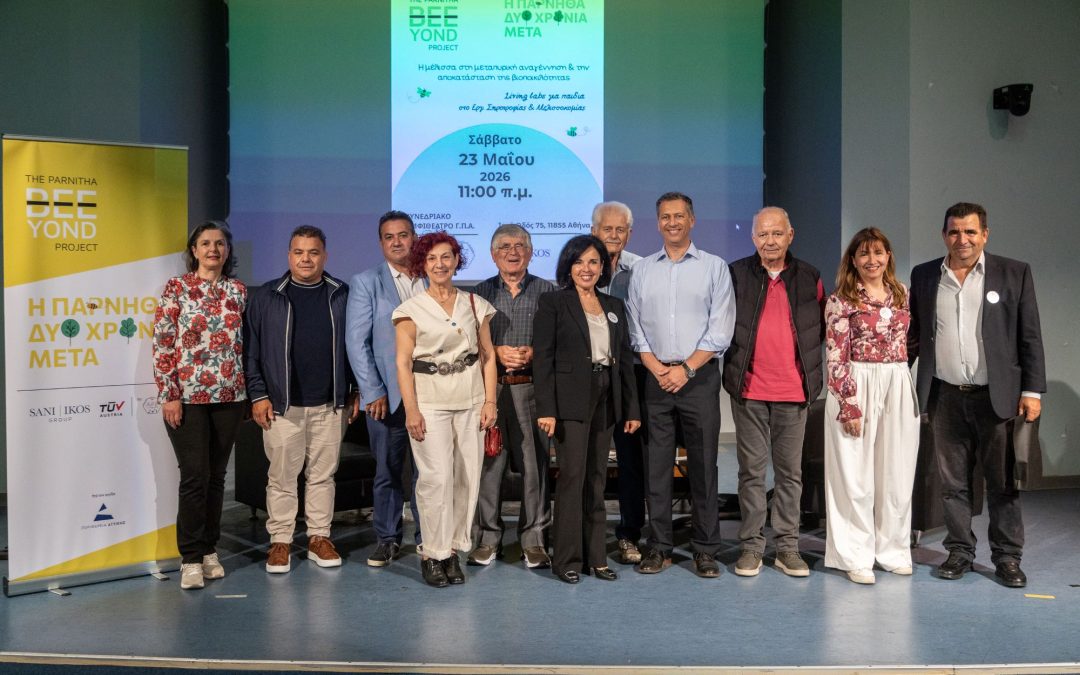
As part of The Parnitha BEEyond Project iniative, a special event was held at the Agricultural University of Athens, with the participation of representatives from the scientific community, institutional stakeholders and program partners. The event included scientific presentations by Dr. Antonios Tsagkarakis, Associate Professor at AUA, and Dr. Fani Chatzina, Research Director at ELGO “DIMITRA”, on the importance of pollinators, post‑fire restoration and biodiversity. Representing the project’s sponsoring companies, Ms. Vaso Kotsaki, Head of CSR & Communication Division at TÜV AUSTRIA in Greece, and Ms. Anastasia Dimitriou, Senior Communication Manager of the Sani/Ikos Group, also addressed the audience. The event concluded with awards presented to scientists and beekeeping associations for their contribution to environmental awareness and ecosystem protection.
At the same time, the Living Labs attracted particular interest through experiential and educational activities for children, aiming to familiarize them with the world of bees, the importance of pollination and the need to protect the natural environment. Through interactive experiences, the young participants had the opportunity to understand the role of bees in preserving life and biodiversity.
Within the framework of these activities, Dr. Antonios Tsagkarakis, Associate Professor at the Agricultural University of Athens, noted: “The scientific data collected so far indicate that the presence of bee colonies, when applied in a controlled and balanced manner, can positively contribute to enhancing biodiversity in post‑fire regeneration areas. Our research continues with the goal of further documenting the role of beekeeping as a tool for ecological restoration, while ensuring the protection of wild pollinators and the preservation of ecological balance.”
Mr. Ioannis Kallias, Country Manager of TÜV AUSTRIA in Greece, stated: “The Parnitha BEEyond Project clearly demonstrates how collaboration between businesses, the scientific community and society can create meaningful environmental impact. For TÜV AUSTRIA in Greece, sustainability is not merely a strategic priority, but a commitment to actions with long‑term value for the environment and future generations. Sustainability and sustainable development are not communication for us, but results. And the project’s initial outcomes fill us with optimism for the future of Parnitha and biodiversity in our country.”
Ms. Eleni Andreadi, ESG Executive Director of the Sani/Ikos Group, added: “Protecting biodiversity and restoring ecosystems such as Parnitha requires long‑term commitment, scientific knowledge and collaboration. Through The Parnitha BEEyond Project, we see that pollinators can play a substantial role in the natural regeneration of fire‑affected areas. For the Sani/Ikos Group, safeguarding Mediterranean ecosystems is a core part of our sustainability strategy, which is why we continue to support initiatives that connect scientific research with meaningful environmental action and public awareness.”
The approach of The Parnitha BEEyond Project aims to highlight a balanced, sustainable and scientifically documented role of beekeeping in the post‑fire restoration of Mediterranean ecosystems, while also promoting the importance of cooperation between science, entrepreneurship and environmental responsibility.
This initiative-along with the corresponding project currently underway in Mytilene in collaboration with the Lesvos Beekeeping Cooperative-stands as another example of TÜV AUSTRIA’s commitment in Greece to actions with positive environmental and social impact, investing in innovative practices that strengthen sustainability and protect biodiversity. For the Sani/Ikos Group, The Parnitha BEEyond Project forms part of its broader sustainability strategy, which includes targeted environmental actions for the protection of Mediterranean ecosystems-such as wetlands and the Sani forest, marine life in the Thermaic Gulf, and pollinator colonies.